Archives

What Is a Parish Archive? A Plain-English Explainer for Local Heritage Researchers
Somewhere in a sacristy cupboard, behind the Christmas decorations and a crate of old hymn books, there is usually a shelf of registers. They are bound in cloth or leather, often water-stained at the corner, and they record the ordinary rites of a community: who was baptised, who married, who was buried. For anyone tracing a family or writing the history of a village, that shelf can be the richest source available — and one of the least understood.
Parish archives are not museums, and they are not public libraries. They are working records, kept because someone needed them, not because someone wanted to preserve them for you. Understanding how they function is the difference between a fruitful afternoon and a wasted journey.
What a Parish Archive Actually Is
A parish archive is the accumulated paperwork of a single worshipping community: the registers of sacraments, the accounts, the correspondence, the membership lists of guilds and confraternities. Its shape depends entirely on local history. A small rural parish may have nothing more than a few ledgers and a folder of letters. A town parish with a medieval church and a long list of clergy may hold metres of shelving, including records inherited from suppressed chapels or absorbed neighbouring parishes.
It helps to distinguish three things that researchers often blur together. The parish archive belongs to the parish itself. The diocesan archive belongs to the bishop's office and typically holds visitation records, correspondence with clergy, and sometimes deposited parish material. The civil registry is the state's record of births, marriages and deaths. Many parishes have transferred older volumes to the diocesan archive for safekeeping; a telephone call now can save a wasted trip later.
One more caution. Parish archives are rarely catalogued in the way a public archive is catalogued. There may be no finding aid, no index, no shelf list. You will often be working from a spine title and a rough date range. That is normal, not a sign that you have been refused help.
What You Will Find Inside
The sacramental registers are the best known holdings, but they are rarely the whole story. Depending on the parish, you may encounter:
- Baptism registers, usually the earliest series, sometimes beginning in the sixteenth or seventeenth century.
- Marriage registers, with entries naming ages, parents, witnesses and occasionally dispensations.
- Burial registers, noting date of death, age, and sometimes burial place or the cost of the funeral.
- Confirmation and first communion lists, often thin but useful for filling gaps.
- Status animarum, or "state of souls" — house-by-house surveys of parishioners, sometimes listing ages, occupations and whether Easter duties had been fulfilled.
- Confraternity and guild books: membership rolls, minutes, accounts, feast-day arrangements.
- Fabric accounts and building records: contracts, receipts, repairs, pew rents, bell maintenance.
- Correspondence with the bishop's office, visitation returns, pastoral letters and decrees.
- School and catechism lists, including the names and ages of children.
- Photographs, memorial cards, printed bulletins, newspaper cuttings and the occasional handwritten chronicle kept by a conscientious priest.
Not every parish holds all of these, and a parish that "has no archive" may simply mean that no one has looked in the vestry cupboard for forty years. Ask specifically what exists for your period rather than asking whether an archive exists at all.
The Records Family Historians Ask For
Baptism, marriage and burial entries are the core of most enquiries, and for good reason. In many places, before civil registration was introduced, they served as the practical record of birth, marriage and death — which is why they are so often the only documentary trail for ordinary people who left no wills, no property and no letters.
Baptisms
A good entry gives the child's name, the date of baptism, the date of birth, the parents' names (including the mother's maiden name), the godparents, and the place of residence. Note that baptism often followed birth within days. An entry that seems a year out of step with the family's story is usually a baptism recorded in a different calendar year, not an error.
Marriages
Marriage entries frequently name both fathers, the witnesses, the ages or "of age" formulas, and the place each party came from. Where one spouse came from another parish, the banns may be recorded in both places.
Burials
Burial registers give a date of burial rather than a date of death, so allow a few days. Ages may be rounded, and for older parishioners may be approximate to the decade.
Before your visit, learn what the handwriting of the period looks like and refresh the Latin terms you are likely to meet — filius, uxor, vidua, spurius. Names were not spelled consistently; a single family may appear as Bartolomeo, Bartholomeus and Bortolo in three consecutive entries.
Who Can Access a Parish Archive
Access is usually granted by the parish priest or pastor, though some dioceses have a formal policy, a designated archivist or a central appointment system. Practices vary widely between countries and dioceses, so the only reliable approach is to ask the parish directly and then, if necessary, the diocesan office.
Expect certain limits as a matter of course. Registers still in use, and records concerning living people, are commonly restricted out of ordinary privacy concern; many dioceses also restrict very recent volumes. Some parishes welcome visitors and offer copies; others ask for a small contribution toward staff time or reproduction costs. Ask about charges in advance so there are no awkward moments at the door. If access is not possible, alternatives exist: diocesan archives, civil records, cemetery registers, local history societies, probate and land records, and newspaper archives.
How to Prepare for a First Visit
- Work backwards first. Build a chart of what you already know — names, dates, places — and mark the gaps you want the registers to fill.
- Write a short list of questions. Three or four specific targets, with approximate years, beat a vague hope of finding "the family".
- Contact the parish in writing. Say who you are, who you are researching, the approximate dates, and what you hope to see. Keep it to a paragraph.
- Ask the practical questions. Opening times, whether a personal visit is possible, whether they would rather answer by email, any fee, whether photography is permitted, and whether there is a table where you can work.
- Check the diocesan archive first. The volume you need may already be there.
- Bring the right kit. Notebook, pencils only, a phone or camera, identification, a magnifier, and a list of spelling variants for every surname.
- Allow more time than you think. Reading a single page of cramped seventeenth-century script can take half an hour.
On the Day: Simple Etiquette That Opens Doors
Arrive on time and introduce yourself briefly. Ask before removing a volume from the shelf, support the spine on a cushion or folded cloth rather than opening it flat on a table, and follow whatever handling instructions you are given; clean, dry hands are often preferred to gloves, which reduce dexterity, but the parish's preference is what matters. No ink pens, no food, no flash photography.
Record your sources as you go: parish name, register title, page or entry number, and date. Note uncertainties with a question mark rather than tidying them away. And when you leave, say thank you properly — then send a copy of anything you transcribe. Parish priests are far more willing to help the researcher who returns something.
A First-Visit Plan That Works
Send one email this week: introduce yourself, name the parish, name the family, give a date range of about twenty years, and ask whether a visit is possible and what you should bring. While you wait, sketch your family chart and write down every spelling variant you have seen. When you go, take only the questions you cannot answer any other way, work slowly, and photograph the whole page rather than the single entry — the neighbours on either side often turn out to be relatives. One afternoon, done patiently, is usually worth a month of browsing.
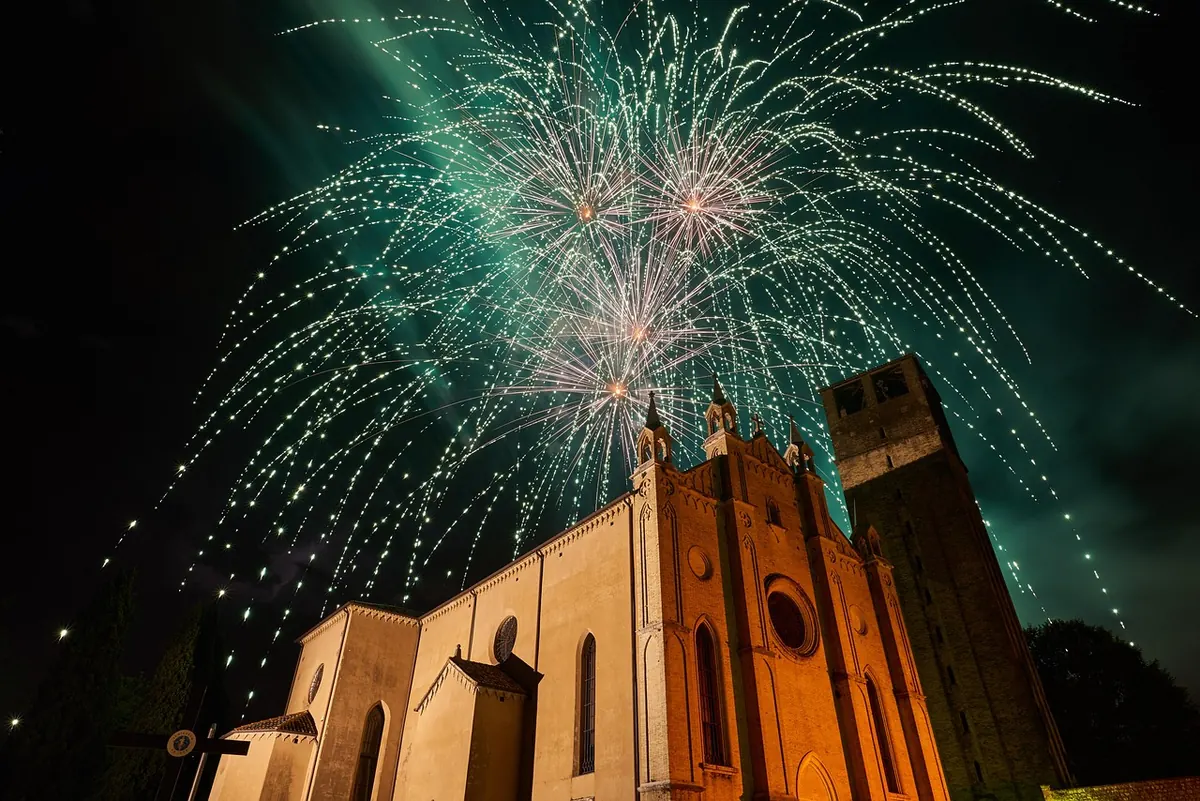
Photo: AhmadArdity / Pixabay
Related Articles